Unveiling the Invisible: How AI Maps Magnetic Chaos to Boost Electric Motor Efficiency
Electric vehicles (EVs) are transforming transportation, but a hidden enemy lurks inside their motors: magnetic energy loss. This wasted power not only reduces range but also generates excess heat. Now, a team of researchers in Japan has developed a groundbreaking AI-driven physics model that can visualize the chaotic, maze-like magnetic patterns within motor materials. These patterns reveal exactly how microscopic magnetic structures and heat conspire to drain energy. This Q&A explores the discovery and its potential to revolutionize motor design.
1. What is the hidden energy drain inside electric motors that researchers have now exposed?
Inside every electric motor, magnetic fields spin and switch direction as the motor runs. However, these fields don't always move smoothly. They can form complex, disorderly patterns—often described as a "maze" of magnetic domains. These chaotic configurations cause magnetic energy loss, a phenomenon where energy intended for motion is instead dissipated as heat. Up until now, scientists could only estimate this loss indirectly. The new AI model, developed by researchers in Japan, allows for direct observation of these microscopic magnetic structures and quantifies exactly how they waste energy. This is a major step forward because it identifies the precise locations and conditions where energy is lost, paving the way for more efficient motor designs.
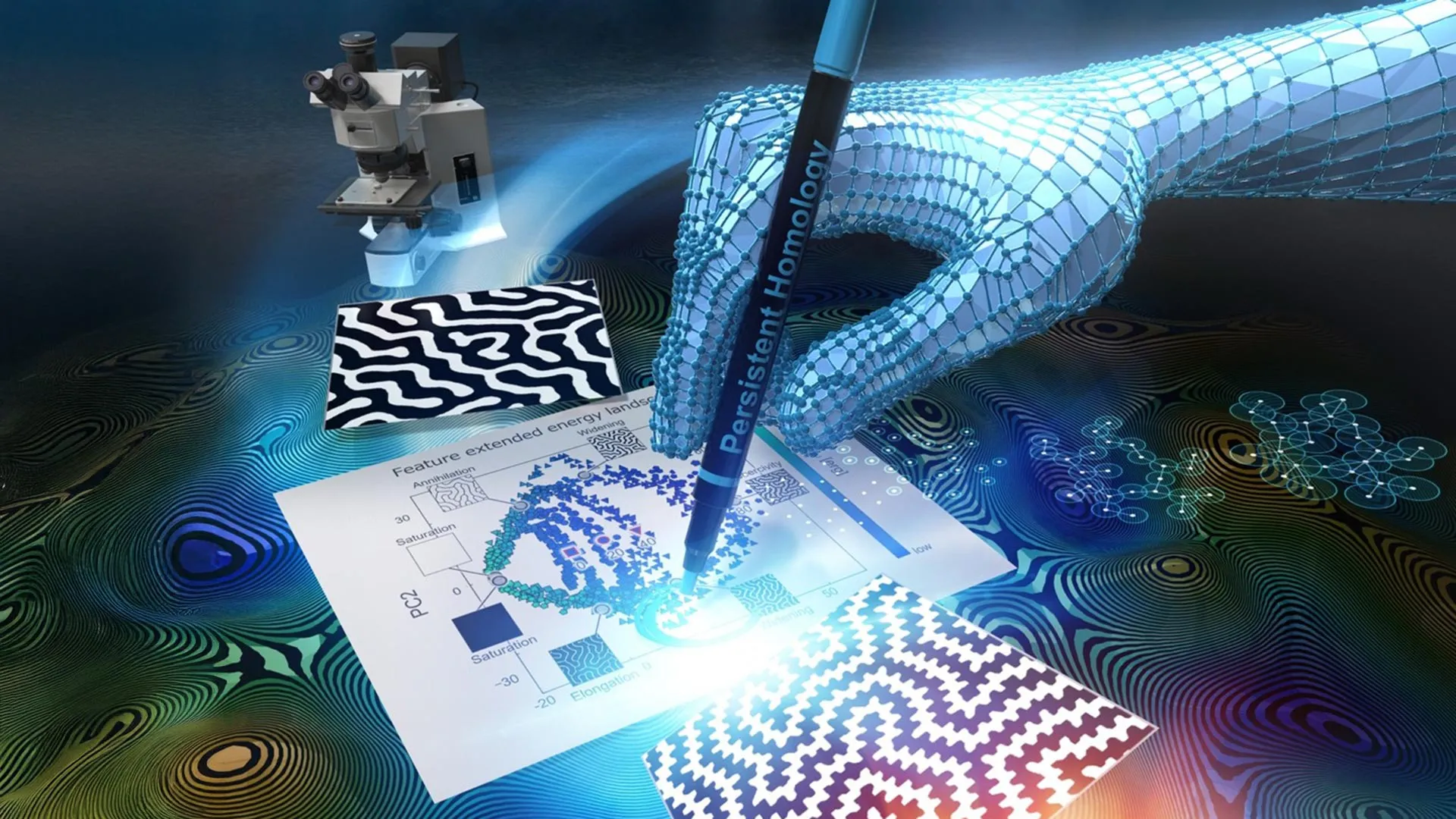
2. How does the AI model work to visualize these magnetic patterns?
The AI model is built on a physics-based framework that simulates magnetic behavior at a microscopic scale. It uses machine learning to analyze data from high-resolution imaging of motor materials, such as silicon steel laminations. The AI then reconstructs the intricate, maze-like patterns of magnetic domains—tiny regions where atomic spins align. By tracking how these domains shift and interact under different operating conditions, the model can predict where and when energy is lost as heat. Unlike traditional simulations that rely on averages, this AI-driven approach captures the chaotic dynamics that lead to inefficiency. The result is a detailed "map" of magnetic activity, allowing engineers to pinpoint structural flaws or material imperfections that exacerbate energy waste.
3. Why is magnetic energy loss particularly problematic for electric vehicles?
In electric vehicles, every joule of energy counts. Magnetic energy loss directly reduces the motor's efficiency, meaning less of the battery's stored energy translates into driving range. For EV manufacturers, even a 1% improvement in motor efficiency can translate into significant gains in range or reduced battery size. Moreover, the heat generated by magnetic losses can degrade motor components over time, leading to reliability issues. The new AI model offers a way to drastically reduce these losses by revealing the invisible magnetic chaos. This is crucial because as EVs become more mainstream, optimizing every component is essential for cost and performance. The research could lead to motors that are not only more efficient but also lighter and smaller, further boosting EV adoption.
4. What are "maze-like" magnetic patterns and how do they cause waste?
"Maze-like" magnetic patterns refer to the complex, labyrinthine configurations of magnetic domains inside motor materials. A magnetic domain is a region where the atomic magnetic moments are aligned in the same direction. In an ideal motor, these domains would switch uniformly as the magnetic field changes. But in reality, defects and stresses cause them to form twisted paths and clusters. As the motor operates, these domains must rearrange continuously. This rearrangement involves sudden jumps (called Barkhausen jumps) that release energy in the form of heat and acoustic noise. The AI model reveals that these chaotic patterns are not random; they concentrate in specific areas where material stress or geometry creates bottlenecks. By identifying these weak spots, engineers can redesign motor components to smooth out the magnetic switching, reducing waste.
5. What role does heat play in this process of magnetic energy loss?
Heat is both a cause and a consequence of magnetic energy loss. As magnetic domains shift chaotically, they generate localized heating via hysteresis and eddy currents. This heat can raise the temperature of the motor material, which in turn alters the magnetic properties. For example, at higher temperatures, magnetic materials become less efficient at transmitting flux, and the domain walls become easier to pin or move unpredictably, further increasing losses. This creates a feedback loop: heat causes more chaos, which generates more heat. The AI model accounts for these thermal effects, allowing researchers to simulate how temperature distribution interacts with magnetic patterns. By understanding this coupling, engineers can design better cooling systems or select materials that retain stable magnetic behavior over a wider temperature range.
6. How can this discovery be applied to improve real-world electric motor designs?
The AI model provides a powerful tool for motor designers. First, it can be used to optimize material composition—for instance, by identifying which grain boundaries or impurities exacerbate magnetic chaos. Second, it can guide geometric modifications, such as reshaping the motor's stator teeth or rotor slots to promote uniform domain switching. Third, the model can simulate different operating conditions (like varying loads or speeds) to find the most efficient working points. Manufacturers can also use the model to test new materials virtually before building prototypes, saving time and cost. Ultimately, this research could lead to motors with significantly reduced core losses—by 10% or more—which would directly translate to longer range and better performance for electric vehicles and other applications like industrial machinery.
7. Who conducted this research and what methods did they employ?
The research was conducted by a team of scientists in Japan, led by experts at the National Institute for Materials Science (NIMS) and collaborating universities. They combined advanced microscopy techniques (such as Kerr microscopy) with a novel machine learning algorithm. The AI was trained on high-resolution images of magnetic domains in steel laminations used in motor cores. The team then developed a physics-based model that integrated the observed domain behavior with electromagnetic field equations. The result was a hybrid model—part data-driven, part physics-simulated—that could predict energy loss with unprecedented accuracy. Their findings were published in a peer-reviewed journal, highlighting the potential of AI to solve long-standing engineering challenges. The team plans to refine the model further and make it accessible to motor manufacturers through open-source tools.
8. What are the practical implications for the future of electric motor technology?
This AI breakthrough could revolutionize motor design, making EVs more efficient and affordable. For consumers, it means longer driving ranges without bigger batteries. For manufacturers, it offers a way to reduce costs by using less material while maintaining performance. Beyond EVs, the technology applies to any device using electric motors—from home appliances to industrial robots. Additionally, the ability to visualize magnetic chaos could spur innovations in magnetic sensors and data storage. The research also demonstrates how AI can tackle complex physical phenomena that have been invisible to traditional analysis. As the model matures, we may see motors that are quieter, cooler, and more reliable. The next steps involve validating the model in production motors and exploring its use with advanced materials like amorphous metals or nanocrystalline alloys.
Related Articles
- Exploring Earth's Ring Current: A Comprehensive Guide to the STORIE Mission
- Anthropic Ramps Up Compute Power with SpaceX Deal, Boosts Claude Code Rate Limits
- How to Assess Coffee Flavor Using Electrical Conductivity: A Step-by-Step Guide
- Massive Jurassic Dinosaur Discovery in Argentina Rewrites Southern Hemisphere Evolution
- How Louisiana's Vanishing Coastline Can Guide Global Climate Adaptation
- How Prada Is Revolutionizing Spacesuit Fashion for NASA's Artemis Astronauts
- AI Outshines Physicians in Diagnostic Reasoning, but Real-World Use Remains Uncertain
- Cambrian Fossil Discoveries Illuminate the Dawn of Animal Evolution