Deploying OpenAI’s GPT-5.5 on Microsoft Foundry: A Step-by-Step Guide for Enterprise Teams
Introduction
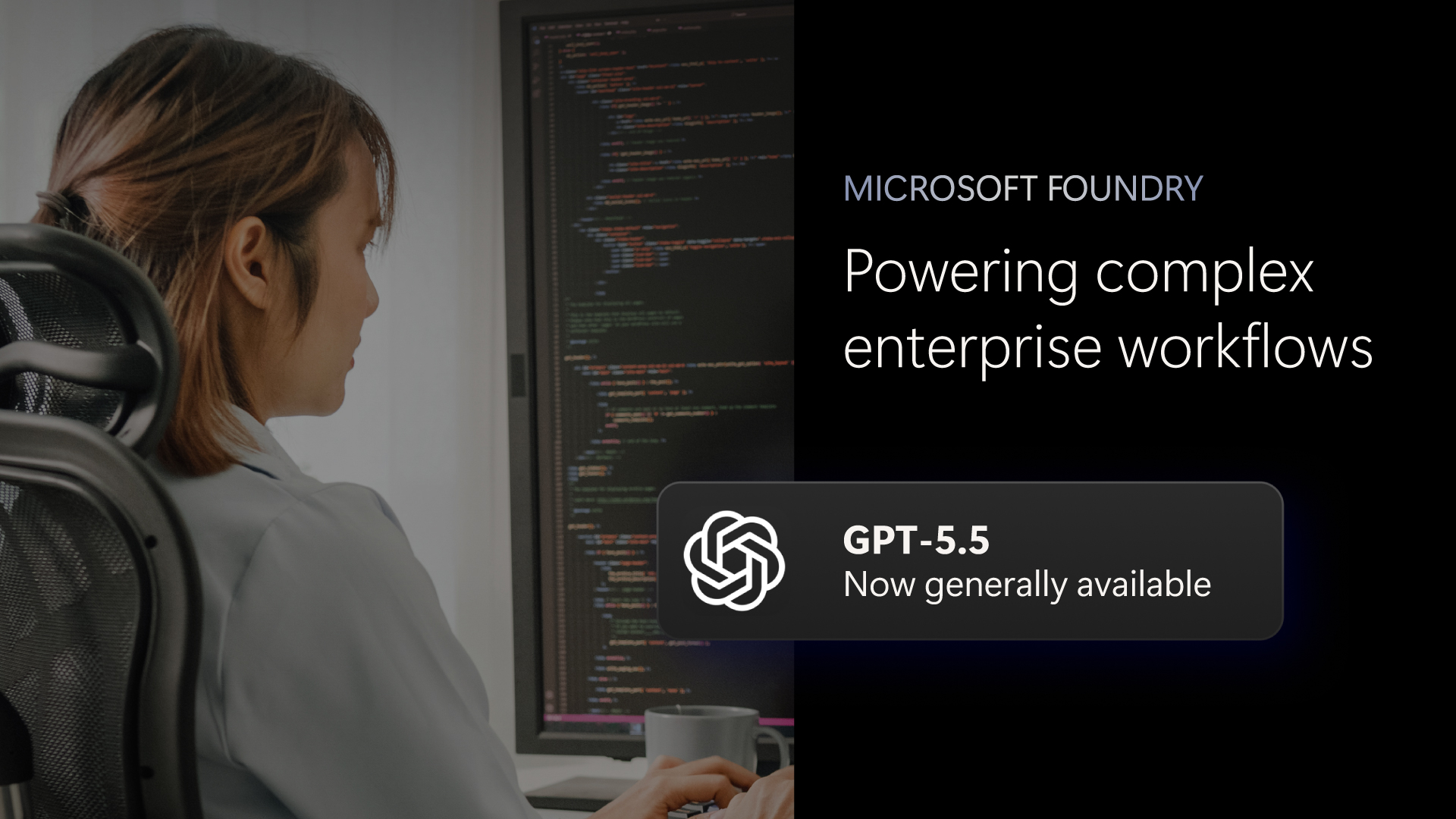
OpenAI’s GPT-5.5 is now generally available on Microsoft Foundry, bringing frontier-level reasoning, agentic execution, and long-context analysis to enterprise teams. This guide walks you through the process of integrating GPT-5.5 into your production workflows using Foundry’s platform. You’ll learn how to access the model, configure it for agent-based tasks, enforce security policies, and optimize token efficiency—all while leveraging Foundry’s enterprise-grade governance. Follow these steps to turn frontier intelligence into reliable, scalable solutions.
What You Need
Before starting, ensure you have the following prerequisites in place:
- An active Azure subscription with permissions to provision AI resources.
- Access to Microsoft Foundry (via Azure AI Studio or the Foundry portal).
- Familiarity with AI agent concepts such as multi-step reasoning and tool use.
- A defined enterprise use case (e.g., code generation, document synthesis, research analysis).
- Basic understanding of token costs and latency for capacity planning.
- Identity and access management (IAM) policies for your organization’s Azure environment.
Step-by-Step Guide
Step 1: Access Microsoft Foundry and Locate GPT-5.5
Log into Azure AI Studio or the Microsoft Foundry portal. Navigate to the Model Catalog and filter by provider OpenAI. Select GPT-5.5 (including the Pro variant if needed). Review the model card for capabilities—long-context reasoning, computer-use improvements, and token efficiency. Click Deploy to create an endpoint. Foundry will automatically configure the environment with enterprise security defaults.
Step 2: Set Up Agentic Execution Workflows
GPT-5.5 excels in autonomous, multi-step tasks. In Foundry, create a new Agent project. Define the agent’s goal (e.g., “Fix ambiguous failures in a codebase” or “Generate a quarterly report from spreadsheets”). Use Foundry’s built-in agent framework to attach tools: code repositories, document databases, and APIs. Configure the agent with multi-step reasoning enabled and set a maximum number of retries. Test with sample inputs to verify context retention across long sessions.
Step 3: Integrate Security and Governance Policies
Foundry allows you to apply enterprise-grade controls at the platform level. In the Security tab of your project, configure:
- Data isolation—ensure no training data leaks to other tenants.
- Role-based access control (RBAC)—restrict model invocation to approved team members.
- Content filters—set thresholds for output safety using Foundry’s policy engine.
- Audit logging—enable detailed logs of all agent actions for compliance.
These steps mirror the tips section on governance best practices.
Step 4: Optimize Token Efficiency for Production
GPT-5.5 delivers higher quality with fewer tokens. To reduce costs and latency:
- Set token limits per request based on your average prompt length.
- Enable streaming in Foundry to receive partial outputs and terminate early if needed.
- Use system prompts to guide conciseness (e.g., “Answer in one paragraph”).
- Monitor retry rates—GPT-5.5’s reliability reduces the need for retries by default.
Foundry’s model monitoring dashboard provides real-time token usage metrics.

Step 5: Deploy at Scale with Foundry’s Managed Infrastructure
Once your agent passes validation tests, deploy it to production. In Foundry, click Deploy and choose a scaling tier (e.g., pay-as-you-go or provisioned throughput). Configure autoscaling based on request volume. Connect the endpoint to your enterprise applications via the Azure API Management gateway. Use Foundry’s canary deployments to roll out updates gradually. Document the deployment in your team’s knowledge base for future maintenance.
Tips for Success
Follow these recommendations to maximize the value of GPT-5.5 on Foundry:
- Start with a pilot project—choose a high-impact but low-risk task like automated code review or document summarization to validate performance before scaling.
- Monitor and iterate—use Foundry’s evaluation tools to compare outputs against ground truth; adjust prompts and system instructions based on feedback loops.
- Leverage GPT-5.5 Pro for complex cases—if your workflow requires deeper reasoning or longer context, switch to the Pro variant; its additional capabilities justify higher cost for mission-critical tasks.
- Use computer-use features cautiously—GPT-5.5’s improved computer-use accuracy is powerful but still benefits from human-in-the-loop supervision for sensitive actions.
- Plan for token cost management—even though GPT-5.5 is more efficient, implement budget alerts in Azure Cost Management to avoid surprises.
- Collaborate with Foundry experts—Microsoft provides architecture reviews and best practice sessions; schedule one to align your deployment with organizational needs.
By following these steps and tips, your team can harness GPT-5.5’s frontier intelligence securely and efficiently on Microsoft Foundry. For more details, revisit the prerequisites or jump to the first step.
Related Articles
- Self-Improving AI Takes a Leap: MIT's SEAL Framework Explained
- MIT's SEAL Framework: A Milestone on the Path to Self-Improving AI
- Deploying GPT-5.5 Powered Codex on NVIDIA GB200 NVL72: A Practical Guide for Enterprise AI Agents
- AI Vulnerability Detection: How GPT-5.5 Measures Up Against Claude Mythos
- 10 Essential Facts About Gemini's New File Generation Feature
- Transformer Architecture Guide Gets Major Update: Version 2.0 Released
- Unmasking the Opt-In Trap: Using Propensity Scores for Causal Inference in AI Feature Experiments
- 7 Key Insights into OpenAI’s Daybreak and Anthropic’s Glasswing: What You Need to Know