8 Key Insights Into Russia's Router Hijacking Campaign Targeting Microsoft Office Tokens
Introduction
In a sophisticated cyberespionage operation uncovered in early 2026, Russian military intelligence hackers—tracked as Forest Blizzard, APT28, or Fancy Bear—exploited vulnerabilities in outdated home and small office routers to steal Microsoft Office authentication tokens from thousands of networks. Unlike typical attacks that rely on malware, this campaign quietly redirected DNS settings to siphon OAuth tokens without deploying any malicious code. The operation, which peaked in December 2025, ensnared over 18,000 routers and targeted more than 200 organizations, including government ministries and email providers. Here are eight key insights into how this stealthy campaign worked and what it means for cybersecurity.

1. The Threat Actor: Forest Blizzard and Its GRU Ties
Forest Blizzard is the codename assigned by Microsoft to a hacking group linked to Russia's General Staff Main Intelligence Directorate (GRU). Better known as APT28 or Fancy Bear, this group gained notoriety for interfering in the 2016 U.S. presidential election by compromising the Hillary Clinton campaign and the Democratic National Committee. Their latest operation demonstrates that the GRU continues to refine its espionage capabilities, now targeting authentication tokens rather than directly breaching systems. The group's persistence and resourcefulness make it one of the most formidable state-sponsored threat actors, and this campaign underscores their ability to adapt to new attack vectors.
2. How the Attack Works: DNS Hijacking Without Malware
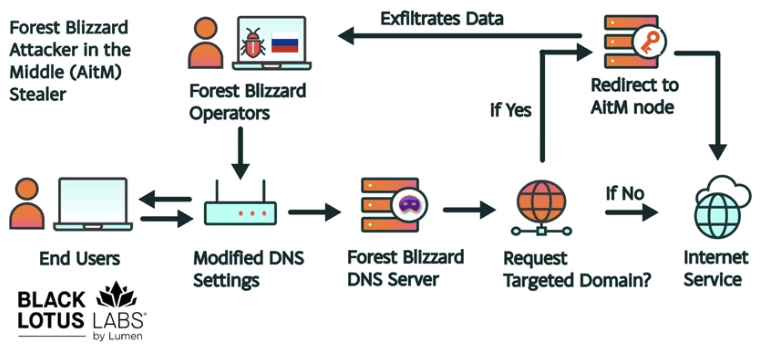
The attackers leveraged known vulnerabilities in older routers—mainly Mikrotik and TP-Link devices—to modify their Domain Name System (DNS) settings. By redirecting DNS queries to attacker-controlled servers, they could intercept traffic intended for legitimate websites. This technique, called DNS hijacking, does not require any malware installation on the router or connected devices. As the U.K.'s National Cyber Security Centre explains, DNS is like a phonebook that translates human-friendly web addresses into IP addresses. By poisoning that directory, the hackers silently rerouted users to malicious sites designed to capture login credentials and OAuth tokens—all while maintaining the appearance of normal connectivity.
3. The Scale: Over 18,000 Routers Compromised
At its peak in December 2025, Forest Blizzard's surveillance network encompassed more than 18,000 internet routers across the globe. Researchers at Black Lotus Labs, a security division of Lumen, identified the scope of the operation by analyzing traffic patterns and compromised devices. The scale suggests a systematic, automated exploitation of unpatched routers, rather than targeted manual attacks. This widespread compromise allowed the hackers to harvest authentication tokens from users on those networks, affecting both organizations and consumer devices. The number of routers involved highlights the risk posed by aging infrastructure that remains unsecured.
4. Targets: Government Agencies and Email Providers
The hackers primarily focused on high-value targets: ministries of foreign affairs, law enforcement agencies, and third-party email providers. Microsoft reported that over 200 organizations and 5,000 consumer devices were caught in the dragnet. By targeting email providers, the attackers could potentially compromise multiple downstream organizations. Government agencies are especially attractive due to the sensitive diplomatic and security information they handle. The selection of targets aligns with the GRU's traditional interest in political intelligence, suggesting the campaign was designed to support broader espionage objectives.
5. The Vulnerable Devices: Older Mikrotik and TP-Link Routers
Most of the compromised routers were end-of-life models from Mikrotik and TP-Link, popular in the small office/home office (SOHO) market. These devices often lack security updates because manufacturers stop supporting them, or users neglect to apply patches. The vulnerabilities exploited were already known, yet many remained unpatched for months or years. The attackers did not need zero-day exploits—they simply scanned for routers with known flaws and automated the DNS modification process. This case underscores the critical importance of securing network hardware, particularly for organizations that may not prioritize router firmware updates.
6. The Stolen Data: OAuth Authentication Tokens
The ultimate prize for Forest Blizzard was OAuth authentication tokens from Microsoft Office users. OAuth tokens are a standard for granting applications access to user data without sharing passwords. Once a user logs in, a token is issued that can be used to authenticate future requests. By intercepting these tokens via DNS hijacking, the attackers could impersonate legitimate users and access their Office 365 accounts, emails, and files—without needing passwords or triggering security alerts. This stealthy method of credential theft is particularly dangerous because tokens can be reused until they expire, giving attackers persistent access.
7. The Timeline: Peak Activity in December 2025
According to Black Lotus Labs, the campaign reached its highest intensity in December 2025, with thousands of routers simultaneously funneling traffic through attacker-controlled DNS servers. The operation appeared to be ongoing for several months prior, but the December peak suggests a coordinated effort to maximize data collection before the holiday period when organizations may have reduced security monitoring. The timing also coincides with political and diplomatic developments, though specific motives remain unclear. Tracking such timelines helps security teams understand threat actor behavior and anticipate future campaigns.
8. Detection and Response: Microsoft and Lumen's Findings
Microsoft disclosed the campaign in a blog post, warning users and organizations to update router firmware, review DNS settings, and monitor for unusual authentication activity. Black Lotus Labs published a detailed report outlining the attack methodology, and the U.K.'s NCSC issued an advisory urging network administrators to check for signs of compromise. Detection is challenging because the attack leaves no malware on the router, but anomalies in DNS logs and unexpected certificate warnings can indicate hijacking. Organizations are advised to use DNSSEC and network segmentation to mitigate such threats. The collaborative response from industry and government aims to disrupt future operations by closing the vulnerabilities exploited.
Conclusion
The Forest Blizzard campaign is a stark reminder that even simple, known vulnerabilities can be weaponized on a massive scale by sophisticated threat actors. By targeting outdated routers and stealing OAuth tokens, the GRU hackers managed to bypass traditional security defenses and access sensitive data with minimal detection risk. For organizations, the lesson is clear: network infrastructure—especially routers that are often overlooked—must be kept updated and monitored for anomalies. As state-sponsored cyber operations continue to evolve, proactive defense measures and cross-sector information sharing are essential to staying ahead of adversaries like Forest Blizzard.
Related Articles
- 10 Essential Facts About The Hacker News Cybersecurity Stars Awards 2026
- CopyFail: The Critical Linux Vulnerability That Sparks Urgent Security Alarms
- Kubernetes v1.36 Phases Out Service ExternalIPs: What You Need to Know
- How to Leverage OpenAI's Daybreak Platform for AI-Driven Cyber Defense
- Cybercriminals Weaponize Amazon SES in Sophisticated Phishing Surge
- Foxconn Cyberattack: Q&A on the Ransomware Incident Affecting North American Factories
- 10 Critical Facts About the PAN-OS Captive Portal Zero-Day Exploit (CVE-2026-0300)
- Unmasking SHADOW-EARTH-053: Q&A on China-Linked Cyber Espionage Campaign